
Jan 28 | What the Heart Tells About the Brain: Insights from Pre-Symptomatic Alzheimer's Disease and Migraine Research"
What the Heart Tells About the Brain: Insights from Pre-Symptomatic Alzheimer's Disease and Migraine Research
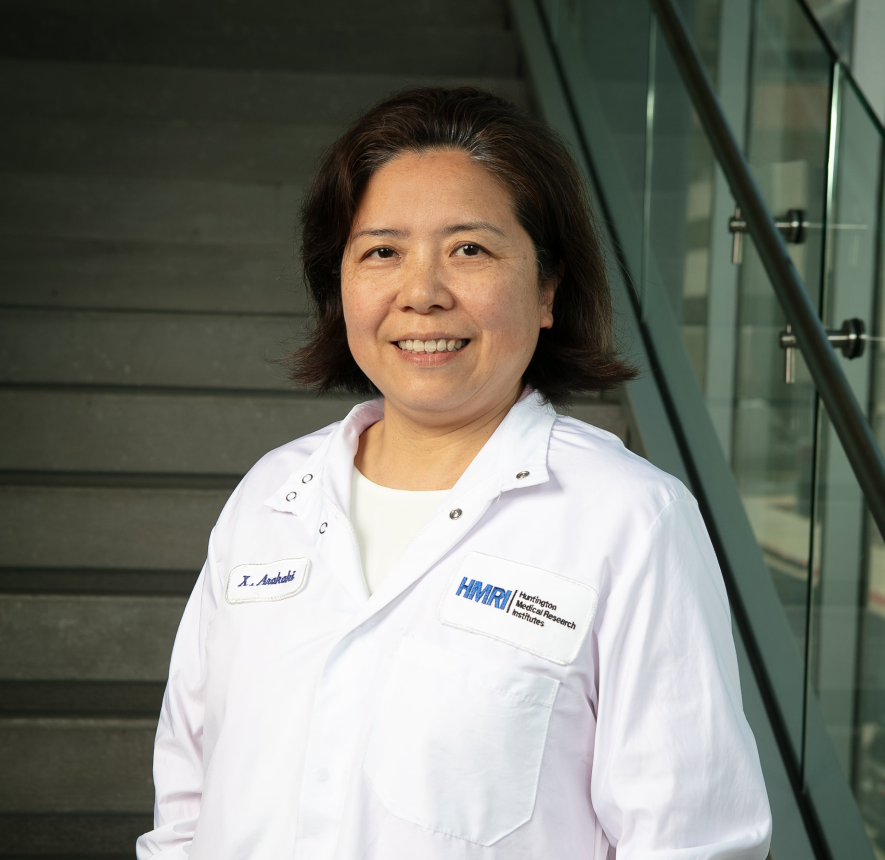
A scientific seminar by Dr. Xianghong Arakaki, MD, PhD
When: Wednesday, January 28, 2026 from 3 to 4 PM
Where: HMRI Auditorium | 686 S. Fair Oaks Ave., Pasadena, CA 91105 (Zoom option available)
Who Should Attend: Scientists, researchers, and scientific enthusiasts
Discover how the heart and brain speak to each other—and how those signals may reveal the earliest signs of Alzheimer’s disease and migraine.
The program will cover:
- What is brain wave, heart wave, and how they work
- Connections between brain wave, heart wave, and cognitive functions in early Alzheimer's disease
- Sex-specific changes of heart wave in pre-clinical migraine model
- Heart, hemispheric asymmetry, and more
ABOUT THE SPEAKER
Xianghong Arakaki, MD, PhD, is Assistant Professor of Clinical and Translational Neurosciences at HMRI and Head of the Cognition and Brain Integration Lab (CBIL). Dr. Arakaki received her MD from the Medical College of Tongji University in Shanghai, China; her MS in neurobiology from the Medical Center of Fudan University in Shanghai; and her PhD in neuroscience from the University of Tennessee. Her research interests focus on heart-brain connections in neurological conditions, including pre-symptomatic Alzheimer’s disease, migraine, and traumatic brain injury, using a multidisciplinary approach. She is the recipient of R56 and R01 awards from the National Institute of Aging and the National Institute of Neurological Disorders and Stroke. She has trained many undergraduate students and postdoctoral fellows. Dr. Arakaki reviews grants for the National Institute of Health and other federal and state agencies. She actively serves the scientific community, including the Institutional Animal Care and Use Committee (IACUC) committee and Alzheimer’s Association.
With dual backgrounds in medicine and neuroscience, Dr. Arakaki has expertise in both in vivo and in vitro electrophysiology: evoked potentials, electroencephalogram (EEG), and electrocardiogram (ECG) involving migraine, traumatic brain injury, and pre-sympathetic Alzheimer’s disease, which fuels her passion for translational and human research. Alongside colleagues and collaborators, Dr. Arakaki is interested in systemic neurophysiological signatures of cognitively healthy individuals at elevated risk for cognitive decline, revealed by non-invasive assessment of conscious, subliminal, and autonomic (CSA) system processing using cognitive challenge testing. Dr. Arakaki’s team is focused on the subtle changes of CSA during core executive function challenging (working memory, Stroop, or task shifting) in a cognitively healthy (CH) population. This reveals compensatory neural mechanisms and decreased cognitive control in those at elevated risk of cognitive decline.
Additionally, Dr. Arakaki investigates the role of sodium homeostasis dysfunction in migraine. Among disorders affecting the nervous system, migraine ranks third globally in terms of disability-adjusted life-years. Therefore, it is critically important to understand how migraines begin. Translational work suggests that changes in sodium concentration ([Na+]) in the cerebrospinal fluid (CSF) occur at migraine onset, possibly caused by choroid plexus (CP) Na, K-ATPase dysfunction. Dr. Arakaki investigates the roles of the choroid plexus and sodium dysregulation in migraine with colleagues and collaborators.
Dr. Arakaki’s early work explored methods to monitor sodium disturbance in rodent migraine models. One study focused on how increased extracellular sodium elevates neuronal excitability using primary cultured neurons, replicated by NEURON simulation. Another study used immunostaining to show that the Na+, K+-ATPase isoforms maintain sodium homeostasis in the key CSF production location at the choroid plexus. Additionally, in translational models, Dr. Arakaki found that brainstem auditory evoked potentials (BAEPs), specifically peak latency and inter-peak latency, were prolonged after nitroglycerin triggering of sensitization, reflecting changes in neurotransmitters and/or hypoperfusion in the midbrain. The results further validate the rodent migraine model for translational migraine research. Her earlier EEG research in mild traumatic brain injury suggested that patients with concussion presented with compensatory brain activation during working memory challenge, as well as decreased learning. This may relate to reduced neural efficiency and multiple concussion occurrences from a lack of safety learning.