
In Memoriam: Dr. Alfred Fonteh, PhD
It is with great sadness that we share the unexpected passing of longtime HMRI colleague Alfred N. Fonteh, PhD.
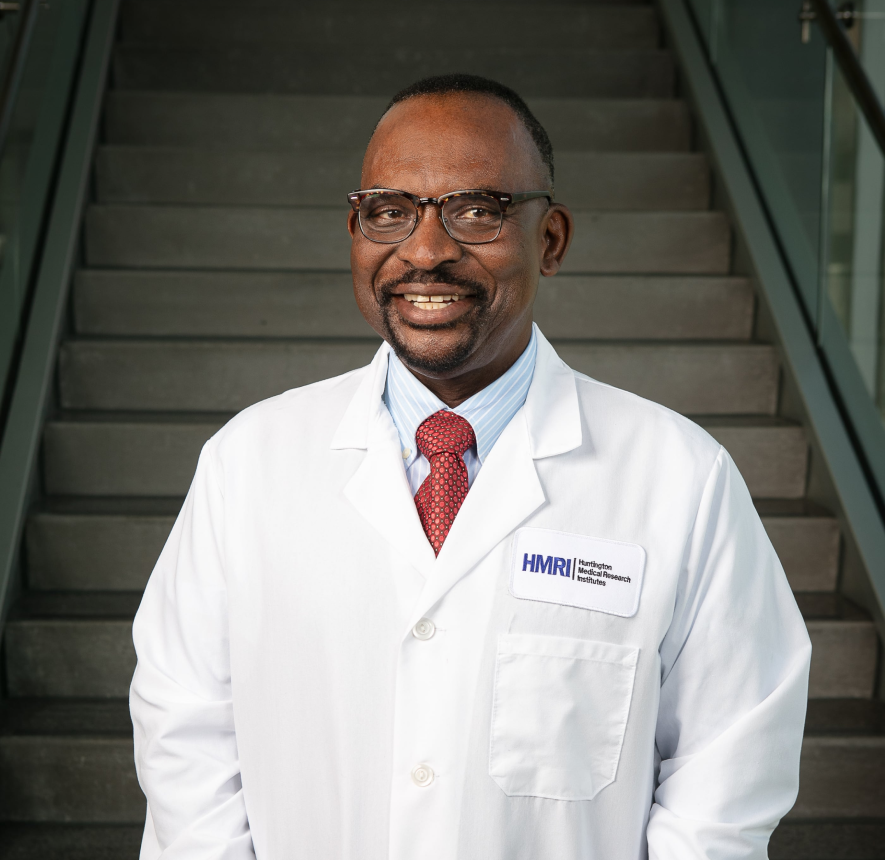
Dr. Fonteh was a deeply valued member of the HMRI community, known for his scientific dedication, generous collegiality, and many years of service to the Institute. His loss will be felt by faculty, staff, collaborators, trainees, friends, and all who had the privilege of working alongside him.
Dr. Fonteh served as Research Professor and Head of HMRI’s Biomarker & Neuro-disease Mechanism Laboratory, where his research focused on lipidomics and the search for less invasive biomarkers of presymptomatic Alzheimer’s disease. Over more than two decades at HMRI, he developed methods for characterizing lipid classes in cerebrospinal fluid, plasma, and urine, with the goal of identifying disease-specific changes that could support earlier diagnosis, prevention, and potential therapies. His work reflected a central scientific insight: that changes in lipid metabolism are not merely structural features of the brain, but may help reveal disease mechanisms and therapeutic targets in Alzheimer’s disease.
“Dr. Fonteh was a gifted scientist, generous mentor, and cherished colleague whose innovative research on lipid metabolism and molecular biomarkers for early detection reflected his unwavering dedication to understanding the biological basis of Alzheimer's disease. His work has had a significant impact on the field, and his kindness, wisdom, and commitment to nurturing the next generation of scientists have left a lasting legacy at HMRI and far beyond,” said Anju Vasudevan, PhD, Chair of the Department of Basic and Translational Neurosciences and a close collaborator of Dr. Fonteh.
“Dr. Fonteh's research efforts significantly contributed to field of biochemistry and lipidomics in both migraine and Alzheimer’s disease research, where his immense intelligence and wisdom were always paired with a generous spirit of support. It was his foundational research that helped secure critical funding for HMRI and colleagues, and his original contributions have left an indelible mark on our field. Beyond his own discoveries, his true legacy is in the scientists he nurtured, whose careers and interests he championed with patience and care. As a friend, he offered sincerity and built relationships of the highest quality; as a collaborator, he shared his deep molecular mechanistic insights with an open mind, inspiring many successful studies. His passion and knowledge were irreplaceable, and his loss is immeasurable—to his family, to his friends, to his colleagues, and to the scientific community that so greatly benefited from his unique and significant role,” said Xianghong Arakaki, MD PhD, Head of Cognition and Brain Integration Laboratory and a close collaborator and friend of Dr. Fonteh for nearly two decades.
His work was highly collaborative, bringing together expertise in clinical neurology, neurophysiology, cardiology, synthetic organic chemistry, neuroradiology, biostatistics, computational mathematics, analytical biochemistry, and lipidomics. He collaborated with colleagues at Caltech, the Mayo Clinic, Stanford, the University of Texas Health Science Center at San Antonio, and the University of Southern California, reflecting the multidisciplinary approach he brought to the challenge of developing non-invasive biomarkers of presymptomatic Alzheimer’s disease.
Dr. Fonteh’s scientific service extended well beyond HMRI. He served as a faculty council member for the African Initiative on Bioinformatics Training in Neurodegenerative Diseases, an External Advisory Board member for the BUILD-FSA project, focused on large-scale dementia research in French-speaking Africa, and served as a mentor to students in that initiative. His professional service included editorial and peer-review roles with Molecular Neurodegeneration, Frontiers in Physiology, Disease Biomarkers, NIH study sections, Department of Defense research programs, and other national and international scientific bodies.
In a 2015 interview, Dr. Fonteh reflected on how his grandmother’s experience with memory loss helped shape his commitment to Alzheimer’s disease research. He described how, before diagnosis was readily available in his home village, his family witnessed the profound disorientation and loss of recognition that can accompany the disease. That early experience helped inspire his scientific focus: understanding the causes of Alzheimer’s disease, identifying it earlier, and finding ways to intervene before it progresses.
More recently, Dr. Fonteh shared his research in a scientific lecture, “The Involvement of Lipids in Alzheimer’s Disease Pathology and Potential Therapies.” In the lecture, he explored how changes in brain-derived lipids may serve as early, non-invasive indicators of disease risk and inform emerging therapeutic and preventive strategies.
“Alfred was a valued colleague and friend whose presence shaped HMRI for many years,” said Dr. Julia Bradsher, President and Chief Executive Officer of HMRI. “We are heartbroken by his passing and grateful for the time we shared with him.”
Beyond his scientific work, Dr. Fonteh was known by colleagues for his kindness, warmth, and steady presence. He was generous with his time, thoughtful in his collaborations, and deeply committed to the work and people of HMRI. He also mentored young scientists and fostered the kind of collaborative, translational research that connects laboratory discovery with patient care.
HMRI will host an informal gathering for faculty, staff, collaborators, friends, and members of Dr. Fonteh’s family to share memories and reflect together. The gathering will take place on Tuesday, July 7, 2026, at 3:00 PM in the Engemann Family Auditorium. A Zoom option will be available for those who are unable to attend in person.
We extend our deepest condolences to Dr. Fonteh’s family, friends, colleagues, and all who knew him.